- Aisuebeogun at summit: Why Nigeria needs resilient transport system to survive external shocks
- Babalakin lauds Tinubu over 19 years BASL, FG dispute resolution, pledges mass job creation
- Air Peace strengthens leadership pipeline with key flight operations appointments
- Transport Summit Holds Friday
- What Abuja private jet door blowout reveals about aviation safety



States stuck in rat race for own airlines
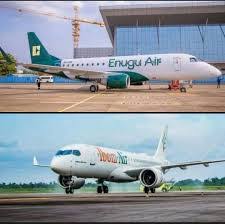
The rush by state governments to set up airlines is fueled by a mix of economic necessity, prestige, and the desire to control a key infrastructure sector, writes WOLE SHADARE
The trend of Nigerian state governments establishing their own airlines or entering into partnerships to operate branded carriers has indeed become a significant development in the country’s aviation sector. This phenomenon is best described as a “race” or a growing competitive inclination, which is largely inspired by a single successful model, Ibom Air.

ominous signs
Indications that the Ogun State Government is mulling setting up an airline to be called Gateway Air have once again brought to the fore the growing number of state governments involved in aviation, particularly the airline business.

Ogun State has focused on launching its new international airport (Gateway International Airport) and has entered into operational partnerships with ValueJet for commercial flights.
Airline business among states is gaining traction in the same way as state governments’ deep involvement in airports.
Across Nigeria are state-built airports. The Lagos state government is said to be joining many other states like Bayelsa, Ebonyi, Anambra, Jigawa, Ekiti, Osun, Ogun, Akwa Ibom, Kebbi, Delta, Nassarawa, Gombe, Yobe and many others.
In the same way, the states are building airports; they have found the airline business attractive as a venture to invest in.
State-owned airlines
States like Anambra, Lagos, Ebonyi, and Bayelsa have also expressed interest in floating their own airlines or forming similar partnerships.
Akwa Ibom State’s Ibom Air, launched in 2019, is often cited as the successful model that has inspired others. It is wholly owned by the state government and has built a reputation for schedule reliability and on-time performance, a rarity in Nigeria’s domestic aviation sector alongside ValueJet.

Ibom Air is a great success story among state-owned airlines in Nigeria, and for the first time, it has opened its books to scrutiny, despite being 100 per cent funded by the state government. No airline has come clean on its revenue. Ibom Air has demonstrated tremendous success, indicating that airlines can be profitable in Nigeria if properly managed.
The carrier is projected to increase its revenue to N150 billion in 2025 from N95 billion in 2024, indicating that Ibom Air is growing organically and positioning itself as an airline with the potential to revolutionise the airline business in Nigeria
The Chief Executive Officer of Ibom Air, George Uriesi, recently reiterated the carrier’s ambitious plan, noting that it plans to join the Global Distribution System (GDS) by October 2025; a key instrument to interline and expand with other global airlines.
He was confident that Nigeria could replicate the tremendous work of African regional carriers, ASKY, Africa’s biggest airline, Ethiopian Airlines, Air Côte d’Ivoire, among others, that have strategically positioned themselves for the burgeoning Nigerian market.
His words, “It takes discipline and determination to run airlines like Ethiopian Airlines, ASKY, RwandAir, Air Côte d’Ivoire, and others are cleaning up the market, and we need to respond. They night-stop in Nigeria. ASKY’s passenger traffic was around 100,000 but has grown to I.5 million passengers. That is remarkable. We need to start responding to the market. We believe that there is room for improvement. We can do it.”

Enugu State’s Enugu Air, launched around July 2025, positioned itself as a key part of an economic transformation agenda to turn Enugu into a regional aviation and economic hub.
Cross River State’s Cally Air, launched in 2021, was an arrangement run through a partnership with an existing operator, ValueJet.
ValueJet, a few weeks ago, entered into a sub-lease and operational services agreement with Cally Air (the Cross River State–owned airline) under which ValueJet will manage and operate two Bombardier CRJ1000 regional jets on behalf of Cally Air.
Under the sub-lease, ValueJet will be responsible for the day-to-day operating functions for the two CRJ1000s.
It is understood that the leases are formally held by ValueJet, which will operate under ValueJet’s Air Operator Certificate (AOC).
The move is intended to accelerate the utilisation of the newly acquired regional jets and to provide immediate passenger capacity.
Motivation behind trend
The primary stated goal is to enhance connectivity for business, trade, and tourism. By operating air services, states aim to stimulate economic activity and make it easier for investors, businesspeople, and the diaspora to travel to and from their regions.
The domestic aviation sector in Nigeria is often plagued by flight delays, cancellations, and limited routes, leaving many regions underserved. State-linked airlines seek to fill this void with more reliable service.
It remains to be seen if these new airlines bankrolled by the states would come with a difference or upset the apple cart of the common complaints of passengers on the unending flight delays and cancellations in the Nigerian aviation industry, which has made air travel cumbersome and uninteresting.
State governments have greater access to capital and sovereign credit than most private local airlines, making it easier for them to acquire modern aircraft (often through lease arrangements) and withstand the huge startup costs.
Owning a successful airline becomes a symbol of state progress and prestige, acting as a “national brand ambassador” for the state government.
Challenges, scepticism
The Nigerian aviation environment is brutal, characterised by expensive jet fuel, depreciating Naira (making maintenance, leasing, and spare parts costly), and heavy regulatory hurdles.
This “fad” is viewed with caution by many observers due to Nigeria’s history of failed state-owned ventures.

Despite the enthusiasm, many of these ventures face significant hurdles and draw scepticism based on past failures. States with new or refurbished international airports (like Akwa Ibom and Ogun) see an airline as a way to guarantee traffic and position their airport as a regional hub.
For states like Enugu and Cross River, which operate through private partners, the long-term viability depends entirely on the stability of those agreements and the ability of the state to transition to an independent operation (obtaining a full Air Operator’s Certificate – AOC), which is costly and time-consuming.
Fear of political interference
Previous attempts by states (like Imo Air) to launch carriers have failed due to government interference, bureaucracy, and a lack of professional management—factors that derailed the former national carrier, Nigeria Airways.
The great example of Ibom Air has given many states the courage to venture into the airline business with the hope that the states would engage thoroughbred professionals to manage the business devoid of political interference.
Critics question whether these airlines can maintain the necessary corporate governance to succeed as businesses.
Last line
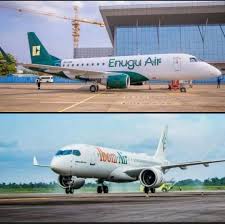
In summary, the race to launch airlines is an attempt by Nigerian states to take control of their economic destinies, with Ibom Air serving as the blueprint for what is possible through professional management and focus. However, the true test lies in overcoming the endemic challenges of the Nigerian operating environment without succumbing to political pressure.
Google+
